
When sash balances fail: repair, restore, or replace double-hung windows in North Easton, MA
If your double-hung windows won’t stay up, the problem often lies with the sash balances—those hidden systems that counterweight the sashes and make them easy to open and close. Homeowners in North Easton commonly ask, “Can my double-hung window sash be fixed, or should I replace the whole window?” This article explains how sash weight and balance systems work, shows the typical failure modes, outlines practical repair techniques (from sash cord replacement to reglazing and balance replacement), and describes the limits of repair so you can decide whether restoration or full replacement is the better long-term choice.
We address the homeowner’s decision, not a remote diagnosis. A qualified inspection helps sort minor mechanical fixes from deeper sash or frame problems. For local support, Boss Services, Inc. evaluates and repairs or replaces windows across Southeastern Massachusetts; learn more about our window services on our Windows and door installation and replacement page or check local details on the North Easton town page.
how double-hung balances work
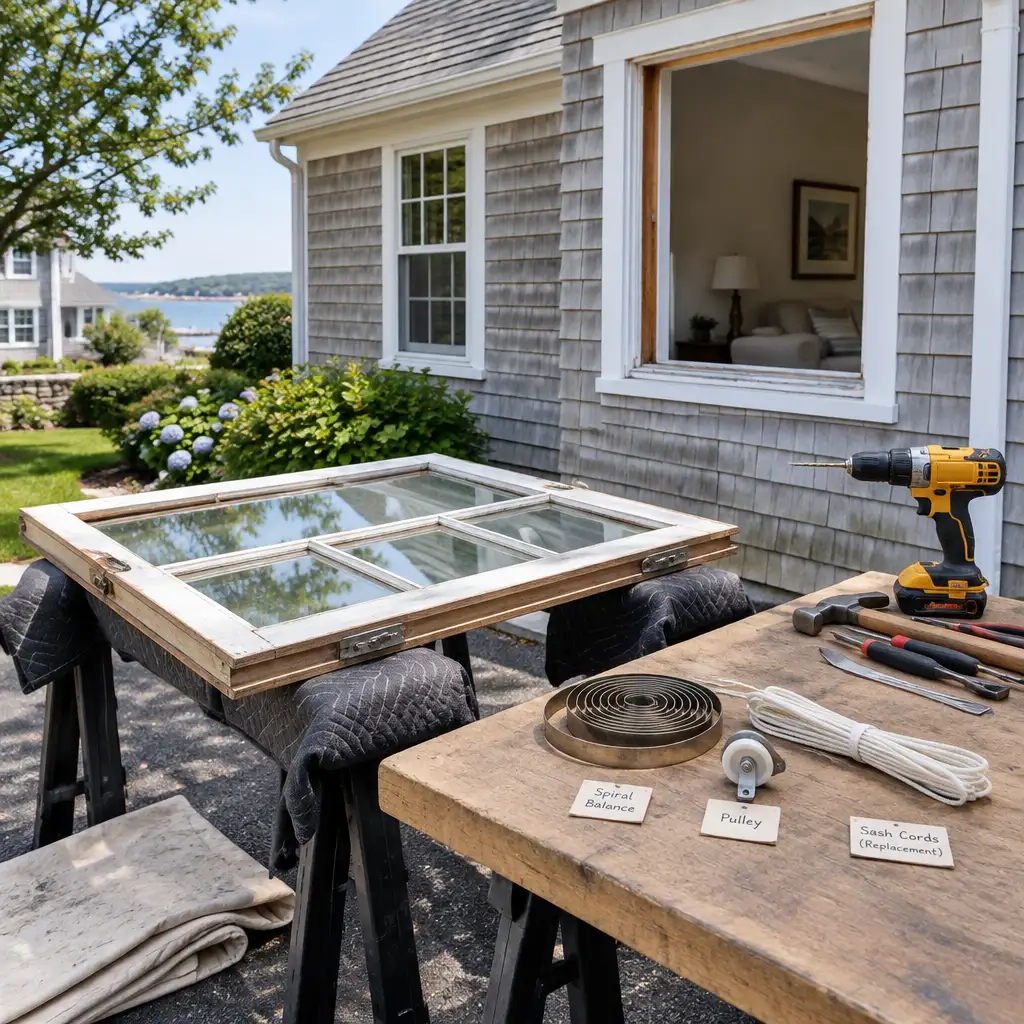
Double-hung windows operate on a simple mechanical principle: each sash (upper and lower) is counterbalanced so it stays wherever you position it. That counterbalance can be implemented several ways across different eras and manufacturers:
- Sash weights and pulleys: In older, traditional windows the sash weight is a physical lead or cast-iron weight concealed inside the jamb, connected to the sash by a braided cotton or synthetic cord running over a pulley.
- Spiral or constant-force balances: Many 1970s–present windows use spiral balances or constant-force (coil) balances mounted inside the jamb; these use a torsion spring to provide upward force.
- Block-and-tackle or channel balances: Some vinyl or aluminum windows use channel balances with a shoe and spring assembly that slides in a metal channel.
All of these systems do the same job: counteract the weight of the sash so you can raise or lower it smoothly without it slamming down. When the balance fails, the sash becomes heavy, unstable, or difficult to keep open.
common failure signs you can observe
Before calling a contractor, you can look for clear, non-invasive signs that indicate the sash balance system is compromised. These observations help focus the inspection and give a realistic idea of whether a repair may be possible.
Common, observable effects include:
- Sash won’t stay up — the most obvious symptom: the sash slides down under its own weight. This is frequently the first sign homeowners report.
- Hard to lift — the sash feels unusually heavy or uneven when you raise it.
- Jerky motion or rattling — noisy movement often points to broken cords, damaged pulleys, or worn balance shoes.
- Sash sits crooked — if one side drops, a cord, guide, or jamb track may be worn or broken.
- Visible fraying or missing cords — with parting stops or sash removed you may see frayed sash cords or a missing spiral balance tube.
- Drafts or water stains around sash — these can be secondary effects from sash that won’t seat properly because the balance doesn’t hold it snugly.
These signs do not automatically mean replacement is required. Many mechanical failures are repairable. The crucial factor is whether the sash and frame themselves are sound enough to accept repaired or replacement balance hardware.
what a professional inspection includes
A contractor’s inspection looks beyond the sash motion to the condition of the sash, jamb, glazing, and surrounding trim. A thorough inspection balances mechanical diagnosis with a look at the window’s long-term serviceability.
Expect the inspector to do several things:
- Operate the sash to feel how it moves, whether both sides rise evenly, and whether a balance failure is symmetric.
- Remove parting stops or interior stops where necessary and safe — this gives access to the balance assembly without removing the sash in many cases.
- Inspect sash edges and rails for rot, swelling, shrinkage, or warping. If the sash is warped, replacement or extensive restoration is more likely.
- Check the jamb for out-of-square conditions, evidence of water damage or rot, and obscured sash tracks that can cause binding.
- Examine glazing and putty for failure. A sash with loose or missing glass stops or failed glazing compound can be repaired, but if moisture has soaked the sash frame the work becomes more complex.
- Assess hardware such as pulleys, balance shoes, pivot bars, and tilt latches for wear or damage.
The inspection concludes with a recommendation: targeted repair (mechanical replacement, cord replacement, reglazing), more extensive sash restoration, or full window replacement. A clear inspection report should note which parts will be repaired, which will be replaced, and what risks remain.
repair options (step-by-step)
When sash balance failure is the primary problem and the sash/frame are fundamentally sound, contractors commonly pursue a sequence of repairs from least to most invasive. Here’s how those repairs typically proceed, what they cost you in disruption, and what they restore.
1. sash-cord replacement (weight-and-pulley systems)
In older homes where sash weights are still inside the jambs, the most common repair is replacing the sash cord and pulley. Cords wear, rot, or snap; pulleys corrode or seize. Replacing the cord restores the original weight balance if the sash weight is intact and the weight housing is functional.
Key points:
- We remove the sash stops or sash to access the pulley and weight cavity.
- New synthetic cords are typically stronger and less likely to stretch than old cotton cord.
- If a pulley is seized or the weight lead has detached, both are serviced or reattached during the same visit.
- Repair time per window is often a few hours, depending on accessibility; no sash replacement required.
2. balance replacement (spiral, channel, or block-and-tackle systems)
Modern windows commonly use spiral balances, channel balances with shoes, or constant-force mechanisms. These are replaceable assemblies; a technician removes the sash, detaches the old balance, and installs the correct replacement part for the window’s size and weight.
Key points:
- Balance replacement restores smooth lift and positional holding when the sash and frame are square and the sash rails are intact.
- Matching the correct length, force rating, and attachment details is essential; a wrong balance will not hold the sash properly.
- In many cases it’s prudent to replace both balances on a sash so they share wear and provide symmetric operation.
3. balance shoe and guide repair
In channel systems, the shoe or guide that rides in the channel can fail, especially if the sash is forced or foreign debris sits in the jamb. Replacing the shoe and cleaning the channel can return good function with minimal sash work.
4. reglazing and sash repair
If the sash is structurally sound but the glazing compound is failing or glass seals have failed, reglazing the sash and repairing minor rot at the sash edge can extend service for many years. Reglazing is often paired with balance work so the sash sits and seals properly after mechanical fixes.
Reglazing steps include removing the sash, taking out the glass, scraping old glazing compound or perimeter seal, priming or repairing shallow wood damage, installing new glass or sealed units, and resealing with fresh glazing compound or compatible sealants.
5. sash restoration (re-sash, part replacement)
When rot is localized—an end or part of a rail—partial sash repair may be the right choice. This can involve dutchman repairs, consolidants, epoxy fillers, and careful sanding and repainting. Restoration preserves historic profiles and interior trim while improving function, but it’s technical work and requires a craftsman comfortable with fine joinery.
6. weatherstripping and sash-fit tuning
Sometimes the perceived balance problem is aggravated by poor sash fit: swollen wood that drags in cold months, missing weatherstripping, or paint buildup. Recutting stop profiles, installing new weatherstripping, and easing sash rails can significantly improve the window’s usability without swapping balances.
7. safety and tilt-in mechanisms
Modern double-hung windows often include tilt-in hardware for safe cleaning. If tilt locks or pivot bars break, the window may be unsafe to work on. Replacing defective tilt elements is part of a responsible repair when planning sash removal for balances or reglazing.
when repair is limited — and why
Repairs are economical when the issue is mechanical and the sash, stop, and jamb are sound. Replacement becomes more likely when underlying wood decay, long-term warping, or repeated sealed-unit failure undermine performance. Below are the common conditions that limit repair viability.
- Extensive sash rot or structural failure — when a sash rail or stile has lost structural integrity, simple balance replacement won’t address the root problem. Extensive sash rehabilitation can be done, but when multiple sashes show deep rot or distortion, full replacement is often more durable.
- Warped or swollen sashes — if a sash is out of square or warped so it binds at multiple points, balances will be under continuous stress and fail sooner unless the sash is corrected or replaced.
- Decayed jambs or sash pockets — if the jamb where the balance runs has rot or water damage, the balance can’t be reliably anchored and the frame will continue to fail unless repaired or replaced.
- Sealed-unit failure or multiple glass failures — older “double-pane” units that leak or multiple units on the same home can indicate systemic performance problems; reglazing is possible but may be less cost-effective than installing new insulated units or replacement windows when many units fail.
- Historic authenticity constraints — if you’re preserving an historic sash with original glass, restoration may be preferable despite higher costs; that is a value-based choice rather than a purely mechanical one.
Assessing these limits requires a careful look at the sash because an invisible rot pocket can be missed by a casual check. We recommend a contractor remove the sash for inspection when there’s any sign of wood decay, repeated leaks, or persistent balance failure.
replacement benefits and considerations
Window replacement is more than swapping out damaged parts. A new unit can improve thermal performance, simplify maintenance, and eliminate recurring repair costs, but it’s a larger investment. Consider these tradeoffs when weighing replacement versus repair.
Benefits of replacement:
- Predictable performance — new balances and sealed glass, new jamb liners, and properly set frames provide reliable function for years.
- Improved energy performance — new units with proper installation, high-quality seals, and optional low-e or gas fills reduce drafts and condensation risk, although exact performance depends on product selection and installation.
- Lower ongoing maintenance — modern vinyl or fiberglass frames and low-maintenance finishes reduce the frequency of repainting and reglazing.
- Opportunity to fix adjacent problems — replacing windows allows simultaneous repair of rotten sills, deteriorated trim, or compromised flashing that might be hidden behind old frames.
Considerations before replacing:
- Preserving interior trim — many North Easton homes have original trim or casing. Full-frame replacement may require careful trim removal and reinstall. If preserving trim is a priority, an insert (retrofit) replacement or custom installation may be needed.
- Cost and disruption — replacement is more costly and disruptive than targeted repairs. Plan sequencing wisely if other exterior work (siding, roofing) is planned.
- Material selection — frame material (wood, vinyl, fiberglass, aluminum-clad wood) affects performance, appearance, and maintenance. Match design and durability to the house’s character and homeowner expectations.
project sequencing and logistics
How you sequence repair or replacement affects cost and outcome. Here are typical project flows depending on the chosen option.
repair-focused sequence
- Inspection and diagnosis (sash removal if required).
- Mechanical repairs: balance replacement, cord or pulley replacement, shoe replacement.
- Sash-specific repairs: reglaze, minor carpentry, weatherstripping.
- Functional testing and finish painting or sealing as needed.
This sequence keeps work localized and minimally invasive. If the sash proves unsalvageable during repair, plan fallback options and budget considerations in advance so you aren’t surprised by mid-project replacement needs.
replacement-focused sequence
- Pre-install inspection and measurement; coordinate with any siding or trim work.
- Remove existing unit and repair any revealed rot in jambs or sills.
- Install new window, flashing, sill pan, and exterior trim as required.
- Interior finish work: reinstall preserved trim, paint, and final sealing.
Coordinate window replacement with other exterior improvements when possible. If you plan new siding or trim, replacing the windows first or at the same time usually leads to neater, longer-lasting flashing and integration.
deciding: repair or replace — a comparison table
| Issue | Repair Feasible | Replacement Recommended |
|---|---|---|
| Broken sash cord or failed spiral balance | Yes — balance or cord replacement | No, unless repeated failures occur |
| Single sash with minor rot at edge | Yes — localized sash repair or dutchman | Only if multiple sashes or repeated rot |
| Multiple failed sealed glass units | Maybe — reglaze or replace multiple units | Yes — full replacement often more cost-effective |
| Rotten jambs or sill framing | Only after jamb repair | Yes — replace window and repair framing |
| Historic sashes with intact profiles and glass | Yes — restoration preferred to preserve character | Replace only if beyond repair or budget/lifestyle demand |
This table summarizes typical choices; the right path depends on inspection findings and homeowner priorities: preservation, budget, and long-term maintenance appetite.
questions to ask your contractor
When you get an estimate, ask focused questions that reveal the scope and longevity of the proposed work:
- What exactly will you repair or replace? Ask for a written list of parts, materials, and whether balances, pulleys, pulleys, or sash weights are included.
- Will you remove the sash for inspection? A visual-only inspection is cheaper, but sash removal often uncovers hidden rot or fit problems.
- If you recommend replacement, will trim or interior finishes be preserved? Discuss trim removal and reinstallation costs if preserving historic mouldings matters to you.
- How will you deal with moisture and flashing? Window problems are often joined to moisture entry; ask how the contractor will correct or prevent leaks at the sill and head.
- What warranties apply to parts and labor? Ask for the scope and duration of protections and confirm any applicable manufacturer warranties in writing.
Good contractors explain the tradeoffs between short-term fixes and longer-term solutions candidly. If a contractor proposes repeated small repairs as a plan without addressing underlying decay or fit, request written explanation and alternatives.
local climate and maintenance notes for North Easton
Southeastern Massachusetts winters and seasonal humidity cycles affect windows. Freeze-and-thaw, ice damming on roofs, and the seasonal swelling and shrinking of wooden sashes can stress balances and finishes. For North Easton homeowners, keep these points in mind:
- Seasonal maintenance matters: Painting, sealing, and keeping drainage clear at sills reduce moisture entry and prolong both sash and balance life.
- Timely repairs avoid escalation: A broken cord or failed balance left unaddressed can lead to a sash falling unexpectedly and cracking the glass or damaging the stop and sill.
- Coordinate exterior work: If you plan siding or roof work, consider timing window repairs or replacements concurrently to simplify flashing and trim work.
For examples of how window work integrates with other exterior improvements, browse our Windows and doors project gallery and see coordination examples; these are gallery illustrations, not claims about specific North Easton projects.
next steps for North Easton homeowners
If your double-hung windows won’t stay up, start with a focused inspection. A local technician can quickly determine whether the issue is a simple balance replacement, a sash-cord failure, or a symptom of deeper sash or frame decay. Here’s a practical sequence you can follow:
- Document what you see: which windows don’t hold position, whether one or both sashes are affected, and whether there are drafts or visible moisture stains.
- Schedule an inspection with a contractor experienced in window repair and restoration; a good estimate distinguishes between repair and replacement clearly.
- Reference the company’s windows and doors service page to verify scope: Windows and door installation and replacement.
- Decide whether preservation or replacement is your priority. If you value original sash profiles and historic glass, restoration may be appropriate. If you prefer low-maintenance performance and improved thermal performance, replacement is a reasonable direction.
- Coordinate with other exterior work such as siding or flashing repairs. When structural rot at sills exists, replacement often lets contractors correct the underlying framing at the same time.
For local scheduling or to request an evaluation, you can find our North Easton town page here: North Easton, or browse our project examples in the Windows and doors project gallery.
FAQ
Q: My window sash falls quickly and scared my child. Can a technician add a safety device to prevent sudden drops?
A: Yes. When a balance is failing, we replace it and can also install safety devices such as limit stops and sash locks or suggest sash-retention hardware. The primary fix is replacing broken balances or cords so the sash won’t drop unexpectedly.
Q: If only one window in my house won’t stay up, is it worth replacing all windows?
A: Not necessarily. If a single window has a localized mechanical failure or minor rot, targeted repair is often cost-effective. Replacement makes more sense when many units show similar age-related failures, repeated glass seal failure, or the homeowner prefers uniform performance and aesthetics across all windows.
Q: Can reglazing solve condensation between panes in sealed units?
A: Reglazing a sash that holds insulated glass can address a single failed sealed unit, but if multiple units fail or the sash is deteriorated, replacing the window with modern sealed units and a tight frame/installation is generally the more durable solution.
Have questions about your home’s exterior? Boss Services, Inc. can help you consider the next step. Contact our team, call 508-297-0635, or email bossservicesinc@comcast.net.